
Difficult conversations at work are easier to avoid than to handle, especially when emotions, power differences, or a history of tension are involved. Yet silence gives a problem room to grow. People fill missing information with their own interpretations and fears, and a group of employees can slowly split into sides. A respectful, well-prepared conversation can clear the air, solve the problem, and help turn coworkers into a real team.
This article will help you prepare for hard conversations, open them with respect, and keep them moving toward a useful agreement. It draws on the FISH! Philosophy to show how your presence, curiosity, and care can change what becomes possible when the topic is tense.
How do you have a difficult conversation at work?
A good difficult conversation moves through six practical stages. The stages give you a path to follow while leaving enough room to respond to the person in front of you.
1. Prepare with facts, a goal, and the right setting
Start by writing down what you know. Separate the person’s actual words or actions from the story you have built around them. For example, “The report was due Tuesday and arrived Thursday” is an observation. “She does not care about the team” is an assumption about intent.
Then define the outcome you hope to reach. Your goal may be a clear work agreement, a plan to improve performance, an explanation of what happened, or a decision about next steps. Think about what outcome could work for both people. Approach the conversation as a shared search for a solution so both people can leave with a workable path forward.
Choose a private place and enough time for a real exchange. A sensitive topic rarely belongs in a hallway, a group chat, or the last two minutes before a meeting. If the other person brings up the issue when you cannot focus, you can say, “I want to give this my full attention. Can we talk at two?” That is Be There in practice: making a clear time to be fully present.
Prepare for your own reactions, too. What words, behaviors, or topics tend to push your buttons? You might become sharp, go quiet, talk too fast, or start collecting evidence for your side. Plan how you will pause and return to your goal. Outline the conversation, but do not script every line. Like a quarterback adjusting when a play breaks down, you need room to respond to what actually happens.
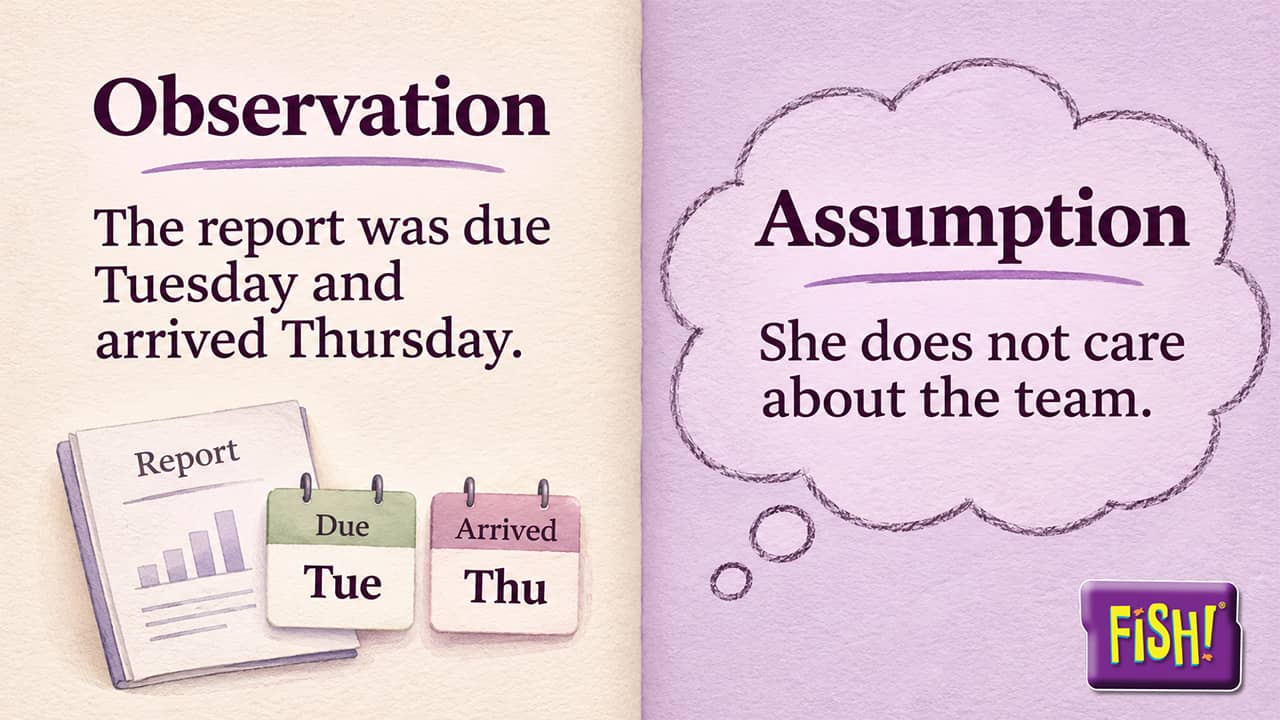
Preparing for a hard conversation starts with sorting what you saw from the story you built around it. A late report is a fact you can discuss, while a guess about someone’s motives tends to make them defensive before they have a chance to explain.
2. Open the conversation clearly and respectfully
Say why you asked to talk, describe the issue briefly, and explain the result you want. Direct language lowers confusion and gives the other person a fair chance to respond.
You might say, “I want to talk about the last two project handoffs. My goal is to understand what got in the way and agree on a process that works for both of us.” For a performance concern, try, “I want to discuss the missed deadlines we have seen this month and make a plan to help you meet the next ones.”
Use specific observations and first-person language. “I felt caught off guard when the client learned about the change before I did” invites a conversation about impact. “You always undermine me” assigns a motive and makes a useful reply harder.
3. Listen and explore the other person’s view
After you open, make room. Ask questions that invite a full answer, such as “Can you tell me more about what happened?” “How did you see the situation?” or “What made that approach seem like the best option at the time?” Asking how someone saw a situation gives them a chance to explain. Demanding to know what they were thinking sounds like an accusation.
Summarize what you hear before presenting your next point: “So the deadline changed while you were waiting for approval, and you thought the client had already been updated. Did I get that right?” You can show that you are working to understand while still holding your own view of the details, because careful listening gives you a stronger basis for the next part of the conversation.
Be There means physical, mental, and emotional presence. Put away distractions, notice when you are forming your answer, and bring your attention back to the person. If you realize you assumed an intention, name the difference privately to yourself: What did I observe? How did it affect me? What am I guessing about the reason?
4. Work on a solution together
Once both views are on the table, ask, “What would improve this from here?” Invite ideas before judging them. This is where Play helps: curiosity creates room for an option that neither person considered at the start.
Try “Yes, and” when you hear a useful part of the other person’s idea. “Yes, and we could add a check-in before the handoff” keeps the idea moving. A quick “Yes, but” often closes the door before the person has finished explaining.
You can still raise limits, risks, or disagreements. Do it after you have understood the idea, and connect your concern to the shared goal. If tension has eased, gentle humor about yourself or the situation can help people breathe. For example, “I seem to have scheduled three urgent things for the same hour” may soften the moment. Humor should never target the other person, rely on sarcasm, or make light of their feelings.
5. Agree on next steps
Turn a general promise into a specific agreement. Decide who will do what, by when, and how you will know the plan is working. If you disagree about the past, you can still agree about the future: “We see the client call differently, and we agree that both of us will be copied on changes from now on.”
Ask the other person to add anything important. A shared plan is stronger when both people can say what they are committing to and what support they need.
6. Follow up
Follow up when you said you would. A short message can confirm the agreement, thank the person for talking, and name the next check-in. If the plan is working, acknowledge the effort. Make Their Day is grounded in sincere recognition, so be specific: “You sent the draft a day early, and it gave us time to catch the client issue.”
If the problem continues, return to the facts and the agreement. A follow-up conversation is easier when the first one created a clear record and a relationship based on respect.
What are examples of difficult conversations at work?
The same process can support many tough conversations at work. These openings keep the topic clear while leaving room for the other person’s perspective.
Addressing a performance problem with a direct report
“Can we talk about the three customer updates that were sent after the agreed deadline? I want to understand what is getting in the way and agree on the support and steps that will help you meet the next deadline.”
Bring examples, explain the effect on the work or team, and ask what the employee needs. Keep the discussion focused on observable behavior and expectations. Specific recognition of progress matters just as much as clarity about the gap.
Raising a concern with your manager
“I would like to discuss how the new priority is affecting the project timeline. I have two concerns and a possible way to reduce the risk. Can we look at them together?”
A manager may have information you do not have, so curiosity is especially important. State the impact, ask how your manager sees it, and frame your request around the team’s goal and the risk you want to address.
Resolving a conflict with a peer
“I want to talk about our last two handoffs because the tension between us is making the work harder. I would like to compare what each of us needs and agree on a better way to work together.”
Describe what you observed, how it affected your work, and what you assumed. Then invite correction. Asking, “What was happening from your side?” can open a door that blame would close. Before you speak, ask yourself whether proving your point matters more than preserving the relationship and getting the work done.
Delivering unwelcome news
“I have difficult news about the project timeline. The launch will move to next month because the security review found an issue. I want to explain what we know, hear your concerns, and talk through what happens next.”
Give the news plainly, then pause. People may need a moment before they can discuss solutions. Make Their Day calls for sincere acknowledgment that respects the person’s real reaction: “I know you put a lot into preparing for the original date, and I understand why this is disappointing.”
Responding when someone brings you a complaint
“Thank you for bringing this to me. I want to understand what happened and how it affected you before we decide what to do.”
Listen for the person’s experience, summarize it, and ask what outcome they hope for. You may need to investigate before promising action. Being present and respectful at the first conversation helps the person stay engaged while you work through the facts.
What should you do if a difficult conversation becomes heated?
First, slow the pace. Lower your voice, leave a little space after each sentence, and name what you notice without judging it: “This is becoming a lot for both of us. I want us to handle it well.” If someone gets angry, acknowledge the feeling and return to the shared purpose: “I can see how frustrating this has been. Let’s take a breath and look at the part we can solve today.”
If someone shuts down, ask a gentle question and offer choice: “Would you like a few minutes, or would it help to write down what you want me to understand?” Silence can mean many things, so do not fill it with your own interpretation. If someone cries, pause the agenda and offer dignity: “Take the time you need. I am here, and we can continue when you are ready.”
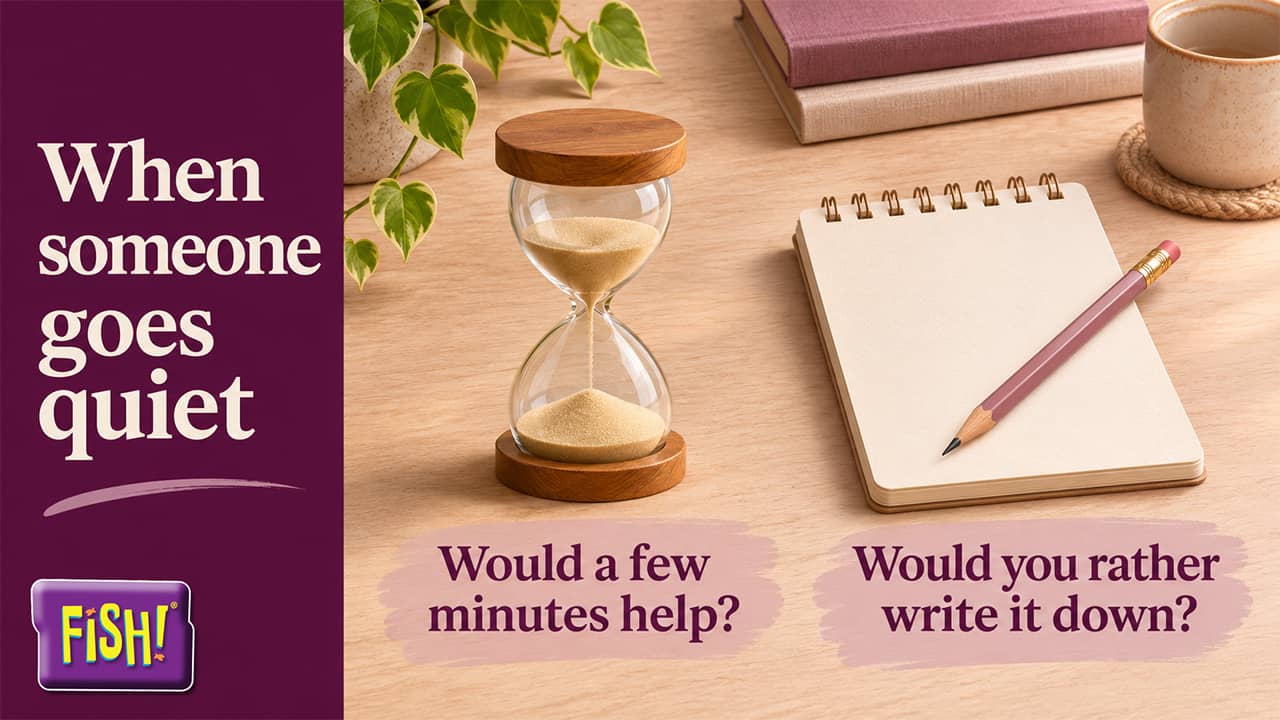
When someone shuts down during a hard conversation, offering a choice of a short break or the chance to write their thoughts down gives them a way back in without pressure.
A break can be a responsible choice when either person is too activated to think clearly. Set a definite return time and keep the topic on the calendar: “Let’s pause for 20 minutes and come back at 3:30.” If there are threats, harassment, discrimination, or a safety concern, involve the appropriate HR or workplace support process.
Choose Your Attitude helps you acknowledge a painful situation while deciding who you want to be in it and continuing to choose that direction as circumstances change. Be There, Make Their Day, and Play help make that choice possible by keeping the person, the feelings, and the search for a way forward in view.
How can difficult conversations strengthen a team?
A hard conversation handled with care gives people better information about each other. It can replace a guessed motive with a real explanation, turn a complaint into a process improvement, and make it safer to raise concerns early. Over time, that honesty helps a team avoid silos and opposing camps.
In ordinary details, the practices give you a connected way to handle the moment: Be There keeps your attention on the person, Make Their Day brings sincere recognition to their effort or feelings, and Play keeps curiosity alive when another option appears. Choose Your Attitude ties those responses to the outcome and relationship you want to support, making room for accountability and kindness in the same conversation.
Questions to reflect on
- When have you avoided a hard conversation, and what small step could help you address a similar issue sooner?
- Which words or behaviors tend to push your buttons during an emotional conversation, and how could you prepare to respond with more control?
- When someone challenges your assumptions, how do you usually react? What could help you stay open long enough to understand their view?
- How can you acknowledge another person’s feelings while still keeping the conversation focused on a useful outcome?
A final step for handling hard conversations at work
The next time you are tempted to avoid a difficult conversation, write down the facts, the outcome you want, and one question you genuinely want to ask. Enter with a plan, then stay flexible enough to learn something. A conversation that begins with tension can still end with clarity, respect, and a stronger way to work together.
Try the FISH! Philosophy with your team
If your team is working through tough conversations, try the FISH! Philosophy upgraded trial. It gives your team 30 days of access to the FISH! film and its digital guides, so you can explore Choose Your Attitude, Be There, Make Their Day, and Play together and start putting these ideas into everyday conversations.

Frequently Asked Questions
Should I have a difficult conversation in person or by video?
Choose the format that gives the topic enough privacy, attention, and emotional space. In person can help with connection, while video can work well for remote teams when everyone turns off distractions and has a private place to talk.
Should I document a difficult conversation at work?
For agreements, performance concerns, safety issues, or recurring conflict, a brief factual record can protect clarity for everyone. Note the date, topic, observations, commitments, and follow-up date, and follow your organization’s policies for formal documentation.
When should I involve HR in a workplace conflict?
Contact HR or another designated resource when the issue involves harassment, discrimination, retaliation, threats, safety, or a pattern you cannot resolve through normal management steps. HR can also help you understand the right process when a conversation involves serious performance or conduct concerns.
How can I rebuild trust after a difficult conversation?
Keep the agreements you made, communicate early when something changes, and offer specific recognition when the other person follows through. Trust grows through repeated actions, so one respectful follow-up often matters more than a perfect first conversation.